Fostering Creativity in Children: Play-Based Learning Ideas
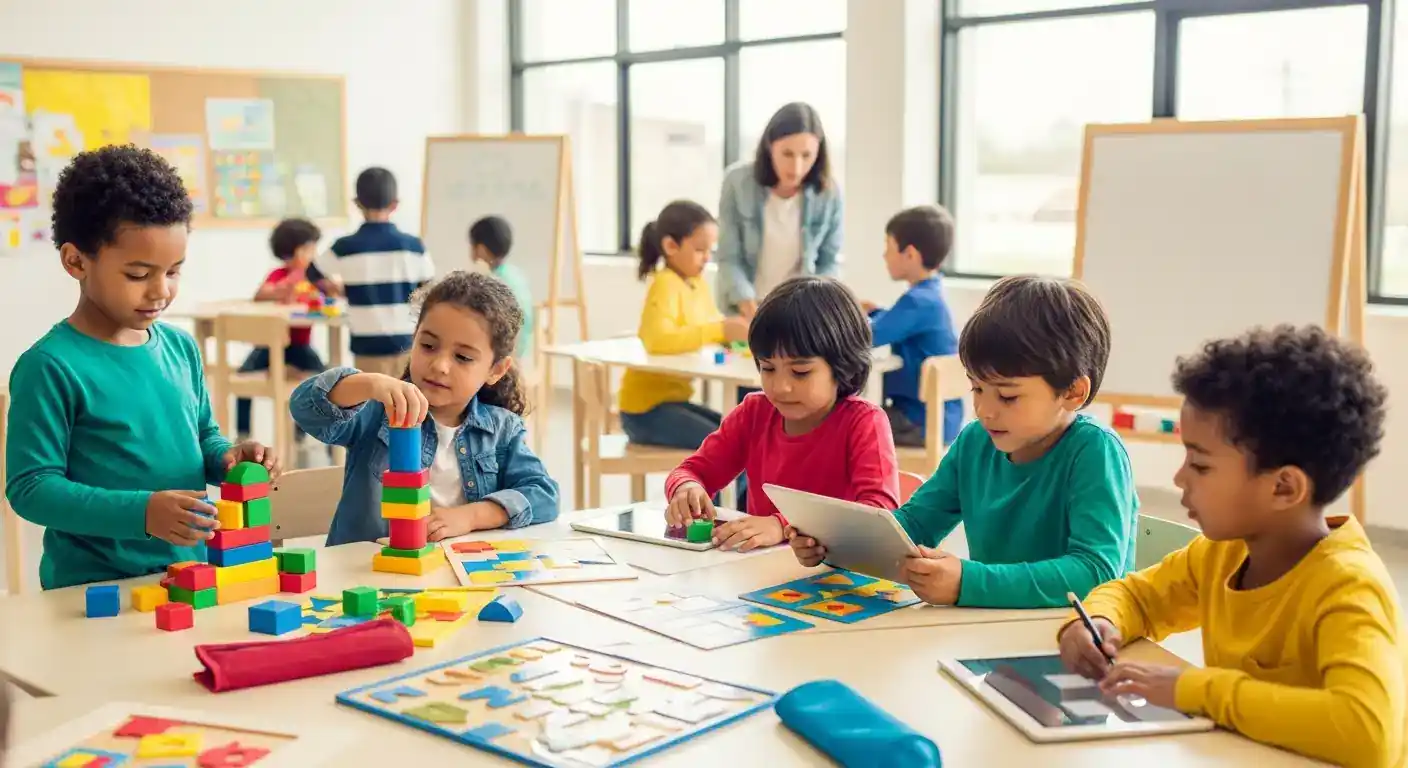
Fostering Creativity in Children: Play-Based Learning Ideas
Creativity is a vital skill that empowers children to think innovatively, solve problems, and express themselves effectively. In a world that increasingly values original thought and adaptability, nurturing a child's innate creative spark is more important than ever. Play-based learning offers a powerful and natural avenue for this development. By engaging children in activities that are intrinsically motivating and encourage exploration, we can lay the foundation for lifelong creativity. This article explores practical and engaging play-based learning ideas designed to foster creativity in children, transforming everyday moments into rich learning experiences.
Key Points:
- Play as a Foundation: Understanding why play is crucial for creative development.
- Open-Ended Activities: The power of materials and toys that allow for multiple uses.
- Process Over Product: Shifting focus from the final outcome to the journey of creation.
- Encouraging Exploration: Creating an environment that supports curiosity and experimentation.
- Role of the Adult: Guiding and facilitating without dictating the creative process.
The Power of Play in Creative Development
Play is not merely a pastime for children; it is their primary mode of learning and development. Through play, children experiment with ideas, test hypotheses, and develop their imagination. When children engage in creative play, they are actively constructing their understanding of the world, making connections, and developing critical thinking skills. This unstructured exploration is the bedrock of creativity, allowing them to venture beyond predetermined paths and discover novel solutions.
Recent research in early childhood education highlights the significant correlation between ample opportunities for free play and enhanced divergent thinking abilities – a key component of creativity. A study published in the Journal of Applied Developmental Psychology (2024) indicated that children with more unstructured playtime demonstrated superior problem-solving skills and a greater capacity for original idea generation compared to their peers with highly structured schedules. This underscores the importance of prioritizing play in a child's routine.
Why Play-Based Learning Works for Creativity
Play-based learning capitalizes on children's natural inclination to explore and discover. It is child-led, meaning children have agency in their learning, which is a powerful motivator for creative engagement. When children are free to choose their activities and direct their own play, they are more likely to take risks, experiment with different approaches, and develop unique ideas. This intrinsic motivation fuels their creative drive, making the learning process enjoyable and sustainable.
Furthermore, play-based approaches emphasize process over product. Instead of focusing on a perfect outcome, children are encouraged to enjoy the journey of creation. This mindset reduces performance anxiety and allows for greater experimentation. For more insights into developmental milestones, readers can explore resources on child psychology and early childhood education.
Engaging Play-Based Learning Ideas for Fostering Creativity
Nurturing creativity doesn't require elaborate setups or expensive materials. Often, the simplest activities can yield the most profound creative growth. The key is to provide children with open-ended opportunities for exploration, experimentation, and self-expression.
1. The Magic of Loose Parts Play
Loose parts are materials that can be moved, manipulated, combined, and redesigned in countless ways. Think blocks, pebbles, buttons, sticks, fabric scraps, cardboard tubes, and natural elements. Unlike traditional toys with a single purpose, loose parts encourage children to invent their own games and create their own structures and narratives.
Benefits of Loose Parts
Unrestricted Imagination: Children can build forts, design vehicles, create habitats for imaginary creatures, or abstract sculptures.
Problem-Solving: They learn to balance, connect, and stabilize their creations, developing spatial reasoning and engineering skills.
Collaboration: When played with in groups, loose parts encourage negotiation, sharing of ideas, and collaborative building.
Differentiated Value: Unlike curated art kits, loose parts play emphasizes resourcefulness and teaches children to see the potential in everyday objects, a crucial skill for innovative thinking. This aligns with modern pedagogical trends that advocate for sustainable and environmentally conscious learning tools.
2. Storytelling and Dramatic Play
Encouraging children to create and act out stories is a fantastic way to boost their imagination, language skills, and creative expression. This can involve simple props, costumes, or just their own voices and gestures.
Ideas for Storytelling
- Story Stones: Paint simple images on smooth stones. Children pick stones and weave a story around the images.
- Puppet Shows: Use sock puppets, finger puppets, or even create simple puppets from paper bags.
- Improvised Scenarios: Set up a play kitchen, a doctor's office, or a spaceship control panel and let children invent their own roles and plotlines.
- "What If" Games: Pose hypothetical scenarios like, "What if animals could talk?" or "What if gravity disappeared for an hour?" and let children explore the possibilities.
This type of imaginative play allows children to explore different perspectives, develop empathy, and practice narrative construction. For parents interested in strengthening their bond, exploring activities that foster communication can be highly beneficial.
3. Open-Ended Art and Craft Exploration
Art provides a direct outlet for creative expression. The focus should always be on the process of making art rather than the final product. Provide a variety of materials and let children experiment freely.
Creative Art Activities
- Process Art: Instead of providing a template, offer materials like paint, clay, collage items, crayons, and paper. Let children decide what they want to create.
- Nature Art: Gather leaves, flowers, sticks, and stones from outdoors and use them to create collages, sculptures, or ephemeral art on the ground.
- Sensory Art: Incorporate different textures into art, such as playdough with added glitter, sand, or natural scents.
- Upcycled Creations: Use recycled materials like cardboard boxes, toilet paper rolls, and plastic containers for building and art projects.
A study by the National Association for the Education of Young Children (NAEYC) in 2023 emphasized that process-oriented art experiences significantly contribute to children's self-esteem and their willingness to take creative risks.
4. Building and Construction Challenges
Beyond simple block play, introduce more structured building challenges that encourage problem-solving and innovation. These can be adapted for various age groups.
Construction Ideas
- Bridge Building: Provide materials like popsicle sticks, tape, string, and cardboard. Challenge children to build a bridge that can support a certain weight.
- Marble Run Construction: Use cardboard tubes, plastic cups, and tape to create elaborate tracks for marbles.
- Fort Building: Offer blankets, pillows, chairs, and clothes pegs. Let children design and build their own cozy hideaways.
- Recycled Structure Building: Provide a large collection of recycled materials and challenge children to build a city, a robot, or a fantasy castle.
These activities foster spatial reasoning, engineering principles, and collaborative problem-solving, all while stimulating creative design.
5. Music and Movement Exploration
Music and movement are powerful tools for creative expression. They allow children to explore rhythm, melody, and physical expression without the constraints of language.
Musical and Movement Activities
- Improvised Dancing: Play different genres of music and encourage children to move their bodies in response to the rhythm and mood.
- Homemade Instruments: Create simple instruments from household items like shakers (rice in a container), drums (pots and pans), or guitars (rubber bands on a box).
- Sound Exploration: Provide a variety of objects that make different sounds and encourage children to experiment with creating their own soundscapes.
- Creative Movement Stories: Tell a story and have children act it out through movement, embodying different characters and actions.
This type of engagement helps children develop their kinesthetic intelligence and express emotions and ideas through non-verbal means.
Creating an Environment That Nurtures Creativity
Beyond specific activities, the environment in which children play plays a crucial role in fostering their creative potential.
1. Providing Open-Ended Materials
The availability of open-ended materials – those with no single prescribed use – is paramount. This includes not just loose parts but also art supplies, building blocks, and even natural elements. These materials invite exploration and allow children to invent their own uses, thereby stimulating imaginative thinking.
2. Embracing Mess and Imperfection
Creativity often involves experimentation, which can sometimes lead to messes. It's important for adults to adopt a tolerant attitude towards mess and understand that it is a natural part of the creative process. Similarly, embracing imperfection in creations allows children to feel safe to take risks and not worry about achieving flawless results.
3. Valuing the Process, Not Just the Product
When children present their creations, shift the focus from "What is it?" to "Tell me about what you made." This encourages them to articulate their thought process, their choices, and their intentions, reinforcing the value of their efforts and ideas, regardless of the final aesthetic.
4. Encouraging Risk-Taking and Experimentation
Create a safe space where children feel comfortable trying new things, making mistakes, and learning from them. Celebrate their attempts and the learning that comes from trying, rather than solely praising success. This fosters resilience and a willingness to explore unconventional ideas.
5. Modeling Creative Behavior
Children learn by example. Adults can demonstrate their own creativity by engaging in hobbies, trying new things, and expressing their ideas openly. Share your own creative process, including any challenges you face, to show that creativity is a journey.
Addressing Common Questions About Fostering Creativity
Frequently Asked Questions (FAQ)
Q1: How can I encourage my shy child to be more creative? A1: Start with one-on-one activities where they feel comfortable. Provide quiet, individual creative outlets like drawing, building with LEGOs, or playing with playdough. Gradually introduce low-pressure group activities where they can observe and participate at their own pace, focusing on their efforts rather than performance.
Q2: Is there a right or wrong way to play creatively? A2: Absolutely not. The beauty of play-based creative learning is its lack of rigid rules. The focus is on exploration, experimentation, and the child's unique expression. What matters most is the child's engagement, imagination, and the learning process they experience.
Q3: How much screen time is too much for creative development? A3: Excessive screen time can displace valuable time for hands-on, imaginative play. While some educational apps can be beneficial, aim for a balance. Prioritize activities that encourage active engagement, problem-solving, and social interaction, which are crucial for robust creative development.
Q4: When should I introduce more structured creative activities? A4: While free play is foundational, introducing gentle structure can enhance creativity. This might involve suggesting a theme for drawing, posing a building challenge, or introducing new art techniques. The key is to keep it playful and allow the child to maintain agency in their creative process.
Conclusion: Cultivating a Creative Future
Fostering creativity in children through play-based learning is an investment in their future. It equips them with essential skills for problem-solving, innovation, and self-expression. By providing open-ended materials, valuing the process, and creating a supportive environment, we empower children to become confident, imaginative, and resilient individuals.
Embracing play-based learning ideas allows children to discover their unique potential and develop a lifelong love for learning and creation. Let's commit to providing our children with the freedom and resources they need to explore their imaginations and build a brighter, more creative future.
What are your favorite play-based learning activities for fostering creativity? Share your ideas in the comments below!
For further exploration into child development and creative strategies, consider looking into resources on child psychology and early childhood education programs. Readers interested in understanding developmental milestones might also find articles on age-appropriate play beneficial.