Enhancing Critical Thinking Skills in School-Aged Children: Practical Strategies for Parents and Educators
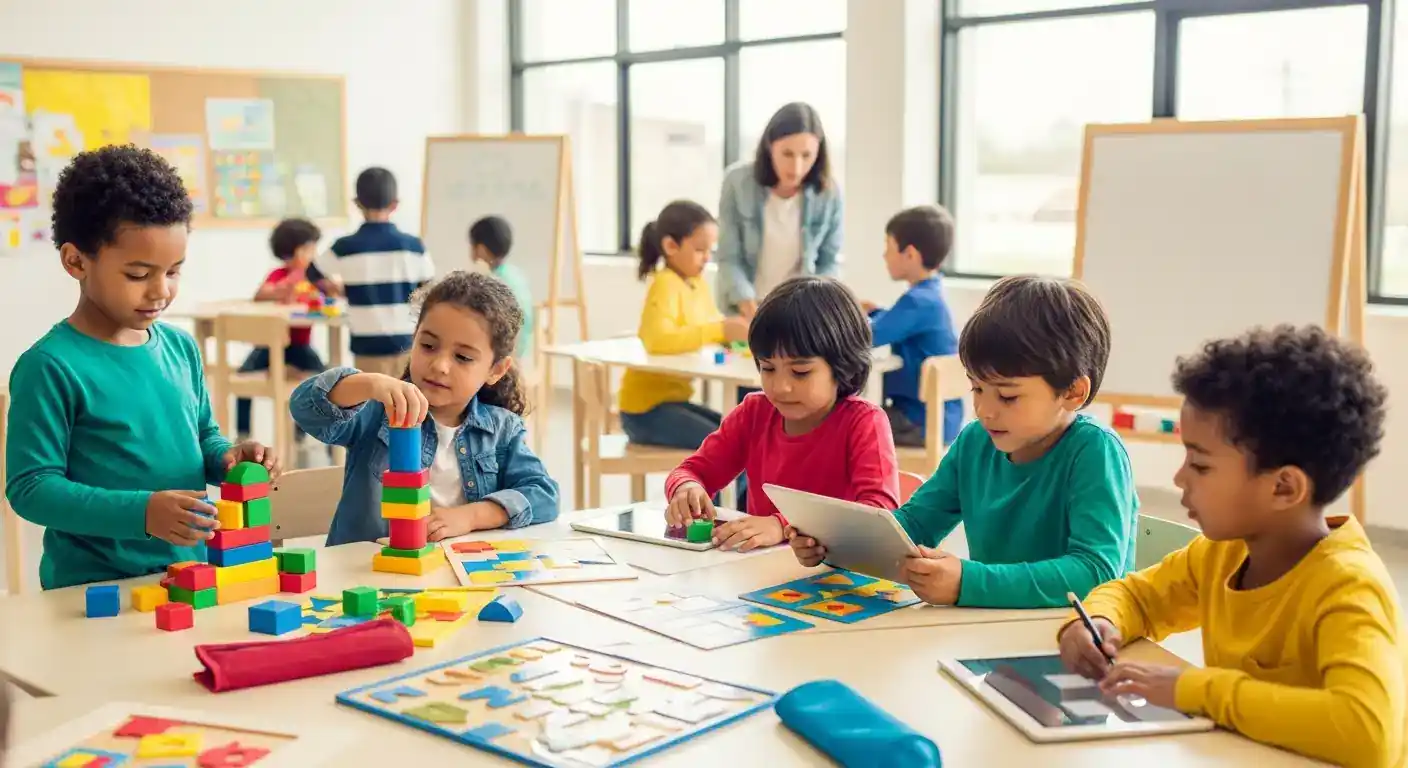
Enhancing Critical Thinking Skills in School-Aged Children: Practical Strategies for Parents and Educators
In today's fast-paced world, the ability to think critically is more vital than ever, equipping children with the tools to navigate complex information and make informed decisions. Enhancing critical thinking skills in school-aged children is not merely an academic pursuit; it's a fundamental life skill that empowers them to question, analyze, and innovate. This article provides practical, actionable strategies tailored for both parents and educators, fostering an environment where young minds can truly thrive. By integrating these methods into daily routines and learning environments, we can lay a strong foundation for cognitive development and lifelong success.
Key Points:
- Define Critical Thinking: Understand its core components: analysis, evaluation, and problem-solving.
- Parental Role: Discover home-based strategies like open-ended questioning and problem-solving games.
- Educator's Impact: Learn about classroom techniques such as Project-Based Learning and Socratic Seminars.
- Differentiated Approaches: Tailor strategies to diverse learners and developmental stages.
- Overcoming Challenges: Address common hurdles and foster a growth mindset in children.
What is Critical Thinking and Why is it Essential for School-Aged Children?
Critical thinking involves objectively analyzing and evaluating information to form a judgment. For school-aged children, this means moving beyond rote memorization to understand concepts deeply, identify logical connections, and solve problems creatively. It encompasses abilities such as observation, analysis, inference, and self-correction. Developing these analytical skills early empowers children to become independent thinkers, resilient learners, and engaged citizens, capable of discerning fact from opinion and making reasoned decisions. This essential skill underpins academic success and future career readiness.
The Pillars of Developing Analytical Skills
At its core, developing analytical skills relies on several interconnected pillars that grow stronger with practice. Children learn to observe details keenly, analyze patterns, and infer meanings from various sources. They then progress to evaluating information critically, questioning assumptions, and explaining their reasoning clearly. Finally, self-regulation encourages them to reflect on their own thought processes, leading to continuous improvement in their cognitive abilities. These pillars collectively form the framework for robust critical thinking.
Practical Strategies for Parents to Foster Critical Thinking at Home
Parents play a crucial role in enhancing critical thinking skills in school-aged children within the supportive environment of the home. By integrating simple yet effective strategies into daily interactions, families can create fertile ground for cognitive growth. These methods encourage curiosity, inquiry, and independent thought, preparing children for academic challenges and real-world scenarios. The goal is to make learning an engaging and continuous process, moving beyond structured lessons.
Encourage Inquiry and Questioning
Cultivating a child's natural curiosity is paramount. Instead of providing immediate answers, ask open-ended questions that prompt deeper thought, such as "Why do you think that happened?" or "What are some possible solutions?" Encourage them to articulate their reasoning and consider alternative perspectives. Modeling curiosity yourself—by questioning things aloud and researching together—shows children that asking questions is a valuable habit, helping them actively engage with the world around them. This process directly supports the development of crucial thinking skills.
Engage in Problem-Solving Activities for Kids
Transform everyday challenges into opportunities for growth. Involve children in family decision-making, like planning a meal or budgeting for an outing, allowing them to contribute ideas and weigh consequences. Engage in puzzles, strategic board games, or building challenges that require logical thinking and foresight. These problem-solving activities for kids not only sharpen their minds but also teach them perseverance and the value of collaboration. Such experiences are invaluable for developing robust critical thinking abilities.
Promote Media Literacy and Skepticism
In the digital age, teaching children to critically evaluate information is essential. Discuss news headlines, social media posts, or advertisements together, prompting questions like, "Who created this message?" or "What might be their motive?" Encourage them to verify information from multiple sources and identify potential biases. Fostering a healthy skepticism helps children differentiate reliable content from misinformation, building their capacity to assess credibility and form independent judgments in an increasingly complex media landscape.
Effective Classroom Strategies for Educators to Enhance Critical Thinking Skills
Educators are uniquely positioned to systematically build and reinforce critical thinking skills in a structured learning environment. By adopting innovative pedagogical approaches, teachers can transform classrooms into vibrant hubs of intellectual inquiry and active learning. These strategies go beyond traditional teaching methods, challenging students to engage deeply with content and develop advanced cognitive abilities. A proactive approach to fostering these skills is vital.
Implement Project-Based Learning (PBL)
Project-Based Learning (PBL) is an immersive approach where students tackle real-world problems and challenges over an extended period. This method requires them to research, analyze data, collaborate with peers, and present solutions. For example, a science class might design a sustainable community garden, necessitating research into botany, engineering, and economics. PBL activities encourage students to think critically, apply knowledge in practical contexts, and develop strong problem-solving and presentation skills. This hands-on method effectively boosts complex thought processes.
Facilitate Socratic Seminars and Debates
Socratic Seminars are student-led discussions focused on exploring complex texts or ideas through thoughtful questioning, rather than direct instruction. Debates further refine this by requiring students to construct and defend reasoned arguments while respectfully engaging with opposing viewpoints. These activities hone listening skills, encourage logical argumentation, and force students to consider multiple perspectives. As a 2024 report by the Brookings Institution on educational reform emphasized, these dialogue-based methods are pivotal for fostering deeper understanding and verbal reasoning.
Incorporate Metacognitive Practices
Metacognition, or "thinking about thinking," involves students reflecting on their own learning processes. Encourage practices like journaling about their problem-solving steps, discussing what strategies worked or didn't work, and identifying areas for improvement. Asking questions like, "How did you arrive at that answer?" or "What steps did you take?" prompts self-assessment. According to the American Psychological Association's 2025 guidelines on cognitive development, explicit metacognitive instruction significantly enhances a child's ability to self-regulate learning and improve their critical thinking capacity over time.
Differentiated Approaches: Tailoring Strategies for Diverse Learners
Recognizing that every child learns differently is key to successfully enhancing critical thinking skills in school-aged children. Differentiated instruction allows educators and parents to adapt strategies to meet varied developmental stages, learning styles, and cognitive abilities. For younger children, this might involve concrete, hands-on activities, while older children benefit from more abstract problem-solving and philosophical discussions. Visual aids, collaborative tasks, and individual reflection opportunities ensure that all students can access and develop their critical thinking potential.
One crucial aspect of differentiated content is recognizing the interplay between critical thinking and broader emotional development. Children’s ability to think critically is often influenced by their emotional state, self-regulation, and capacity to handle frustration. Integrating strategies that build emotional intelligence, such as teaching resilience and effective communication, can create a robust foundation for analytical thought. For instance, addressing cognitive biases or helping children manage the anxiety that can arise from challenging questions is essential. You can learn more about this connection by exploring our resources on /categories/emotional-development.
Overcoming Challenges in Cultivating Critical Thinking
Fostering critical thinking isn't without its hurdles. Common challenges include a lack of time in curricula, children's reluctance to engage with difficult questions, or a fear of making mistakes. To address these, create a psychologically safe environment where errors are viewed as learning opportunities, not failures. Encourage persistence and provide scaffolding for complex tasks, gradually reducing support as skills grow. Implementing strategies for building resilience can significantly help children tackle these challenges more effectively, enabling them to persevere through cognitive discomfort. For further guidance, consider resources on /articles/building-resilience-in-children-effective-parenting-strategies.
Measuring Progress in Developing Critical Thinking Skills
Assessing critical thinking isn't about standardized test scores but rather observing growth in a child's approach to learning. Look for improved questioning, more thoughtful explanations, and the ability to consider multiple viewpoints. Utilize rubrics for project-based tasks that evaluate analysis, evaluation, and synthesis. Research published by the Journal of Educational Psychology in late 2023 highlights the efficacy of observational assessments and self-reflection journals in tracking the nuanced development of critical thinking. Encourage self-assessment through metacognitive prompts, allowing children to articulate their thought processes. Remember, the profound role of play also provides invaluable insights into a child's problem-solving and imaginative thinking. Explore /articles/the-profound-role-of-play-in-cognitive-growth-for-young-learners for more insights into this fundamental aspect of development.
Frequently Asked Questions (FAQ)
What age is best to start enhancing critical thinking skills in school-aged children?
While foundational cognitive skills begin developing in infancy, formal efforts towards enhancing critical thinking skills in school-aged children can begin as early as preschool. Simple activities like comparing and contrasting objects or asking "why" questions can start building this foundation. As children enter elementary school, structured approaches like problem-solving games and open-ended discussions become increasingly effective, tailoring to their growing cognitive capacities.
How can I encourage a child who avoids challenging questions?
Encourage a hesitant child by creating a low-pressure environment where there's no "wrong" answer. Start with simpler questions that build confidence, gradually introducing more complexity. Praise effort and the process of thinking, not just the correct solution. Using familiar topics or interests can also make challenging questions more engaging. Remember, patience and positive reinforcement are key to fostering intellectual bravery.
What are common mistakes parents make when trying to foster critical thinking?
One common mistake is always providing the answers instead of guiding children to discover them. Another is not allowing children to make mistakes, which are crucial for learning and reflection. Over-scheduling with too many structured activities can also limit opportunities for free play and independent thought. Finally, not modeling critical thinking themselves can hinder a child's understanding of its practical application.
How does critical thinking relate to emotional intelligence?
Critical thinking and emotional intelligence are deeply interconnected. Emotional intelligence, which includes self-awareness, empathy, and emotional regulation, provides a stable foundation for effective critical thinking. Understanding one's own biases and managing emotions like frustration during problem-solving allows for clearer, more objective analysis. Conversely, critical thinking can help individuals understand and respond to complex social situations more thoughtfully, enhancing their emotional intelligence.
Conclusion: Empowering Future Thinkers
Enhancing critical thinking skills in school-aged children is a collaborative journey for parents and educators, a commitment to nurturing independent, analytical minds. By consistently applying these practical strategies—from encouraging inquiry at home to implementing project-based learning in the classroom—we equip children with more than just academic knowledge. We provide them with the invaluable ability to navigate a complex world, make thoughtful decisions, and contribute meaningfully to society. Let's continue to champion curiosity, celebrate critical inquiry, and empower the next generation to think deeply and live intentionally.
Ready to Make a Difference? Share your own strategies for fostering critical thinking in the comments below! Subscribe to our newsletter for more insights into child development, and share this article with other parents and educators dedicated to shaping bright minds.
Further Reading:
- Explore more articles on cognitive development and effective learning methodologies.
- Discover resources on building resilience and emotional regulation in children.
- Delve into specific tools for implementing Project-Based Learning in various settings.