Cognitive Development Milestones in Preschoolers: What to Know
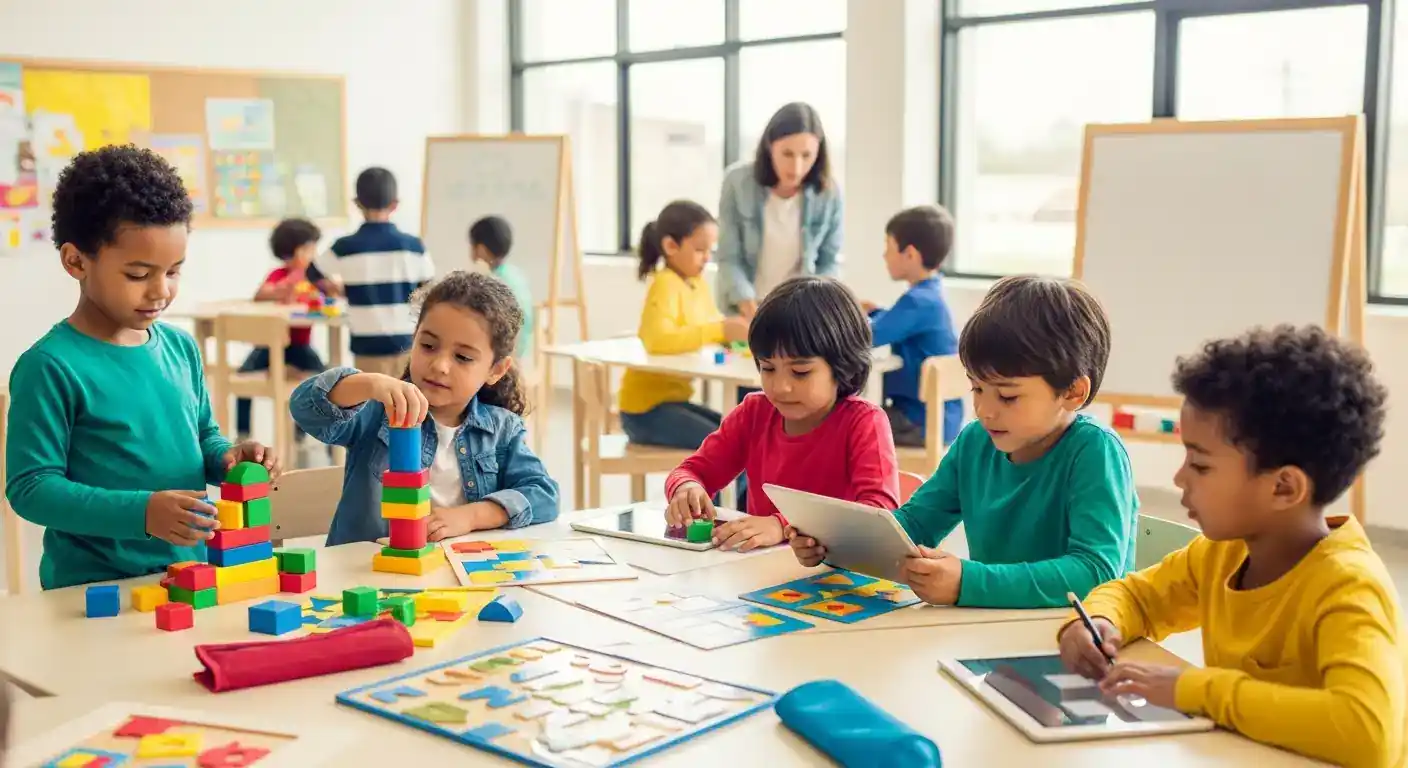
Preschool years, typically from ages 3 to 5, are a period of explosive cognitive growth. During this time, children develop foundational skills that will shape their learning and problem-solving abilities throughout life. Understanding the typical cognitive development milestones in preschoolers allows parents and educators to better support their child's learning journey, identify areas of strength, and provide timely encouragement for challenges. This phase is characterized by rapid advancements in thinking, memory, language, and the ability to understand the world around them.
This guide will explore these crucial developmental markers, offering practical insights and strategies to foster a stimulating environment for young minds. By observing and engaging with children during this vibrant stage, we can significantly contribute to their future academic and personal success.
Key Points:
- Language Explosion: Vocabulary and sentence complexity grow significantly.
- Problem-Solving Skills: Children begin to think through simple problems.
- Memory Development: Improved ability to recall past events and information.
- Symbolic Play: Understanding that objects can represent something else.
- Early Reasoning: Starting to grasp cause and effect.
Understanding Cognitive Development Milestones in Preschoolers (Ages 3-5)
The preschool age is a dynamic period where children move from concrete thinking to more abstract thought processes. Their brains are actively building neural connections at an astounding rate, influencing how they perceive, interpret, and interact with their environment. These milestones are not rigid checklists but rather general indicators of typical development. It's important to remember that every child develops at their own pace.
The 3-Year-Old: Building the Foundation
At three years old, children are typically becoming more curious and engaged with the world. Their cognitive abilities are expanding rapidly, allowing them to understand more complex instructions and express themselves more clearly.
Language and Communication:
- Vocabulary Expansion: A vocabulary of around 900-1000 words is common. They can use 2-3 word sentences.
- Following Instructions: They can usually follow 2-3 step instructions.
- Asking Questions: The constant "why?" phase often begins here, showing a desire to understand the world.
- Basic Storytelling: They can tell simple stories or describe events they've experienced.
Thinking and Reasoning:
- Counting and Number Recognition: Some may recognize numbers and count a few objects.
- Color and Shape Recognition: They can identify basic colors and shapes.
- Cause and Effect: Beginning to understand simple cause-and-effect relationships, like pushing a button makes a toy light up.
- Symbolic Play: This is a hallmark of this age. A block can become a phone, or a stick can be a sword. This demonstrates their ability to think beyond the immediate physical properties of an object.
Memory and Attention:
- Short-Term Memory: Can remember recent events and familiar faces.
- Attention Span: An attention span of around 5-10 minutes on a single activity is typical.
The 4-Year-Old: Expanding Horizons
By age four, preschoolers are exhibiting more sophisticated thinking skills. Their language becomes more elaborate, and they start to engage in more complex problem-solving and imaginative play. This is a crucial stage for developing social-cognitive skills as well.
Language and Communication:
- Larger Vocabulary: Vocabulary can reach around 1500-2000 words, with longer, more complex sentences (4-5 words).
- Understanding Concepts: They begin to grasp concepts like time (morning, afternoon) and basic comparisons (bigger, smaller).
- Narrative Skills: Can tell more detailed stories, often with a beginning, middle, and end. They might even use past and future tenses more consistently.
- Engaging in Conversations: They can hold simple conversations, ask relevant questions, and express their thoughts and feelings more coherently.
Thinking and Reasoning:
- Problem-Solving: They can solve simple puzzles and begin to think through basic problems, like how to reach a toy that is out of reach.
- Classification: They can sort objects by more than one attribute (e.g., sorting by color and size).
- Understanding Rules: They are beginning to understand simple rules in games and social interactions.
- Pre-Reading Skills: May show interest in letters and begin to recognize their own name.
Memory and Attention:
- Improved Recall: Can remember more details about past events.
- Longer Attention Span: Attention span can extend to 15-20 minutes for engaging activities.
The 5-Year-Old: Preparing for School
At five years old, children are on the cusp of formal schooling, and their cognitive development reflects this readiness. They demonstrate increased independence, more advanced reasoning, and a greater capacity for structured learning.
Language and Communication:
- Advanced Vocabulary: Vocabulary can reach 2000-3000 words. Sentences are longer and grammatically complex.
- Understanding Abstract Ideas: They can grasp more abstract concepts and follow more complex directions.
- Storytelling and Retelling: Can retell stories accurately and even create their own elaborate narratives. They often understand the difference between reality and fantasy.
- Phonics Awareness: May start to recognize letter sounds and show an interest in reading.
Thinking and Reasoning:
- Logical Thinking: Begin to show rudimentary logical reasoning, understanding that if A is bigger than B, and B is bigger than C, then A is bigger than C.
- Sequencing: Can sequence events in order, understand the concept of "before" and "after."
- Mathematical Concepts: Can count to 20 or more, recognize numbers, and may understand simple addition and subtraction concepts in concrete terms.
- Planning and Strategy: Some may begin to plan simple actions and strategies to achieve a goal.
Memory and Attention:
- Sustained Attention: Can focus on tasks for 20-30 minutes or longer, especially if the activity is engaging.
- Remembering Information: Can recall more information from stories, lessons, and experiences.
Fostering Cognitive Growth: Strategies for Parents and Educators
Supporting a child's cognitive development is about creating enriching experiences and providing a nurturing environment. It’s less about pushing academic pressure and more about encouraging exploration, curiosity, and critical thinking.
Play-Based Learning: The Cornerstone of Development
- Imaginative and Pretend Play: Encourage dress-up, playing house, or acting out scenarios. This builds creativity, social skills, and the ability to understand different perspectives. For instance, a child pretending to be a doctor is practicing empathy and understanding roles.
- Building and Construction Play: Blocks, LEGOs, and other building toys foster spatial reasoning, problem-solving, and understanding of physics (e.g., balance).
- Puzzles and Board Games: Age-appropriate puzzles develop fine motor skills, problem-solving, and pattern recognition. Simple board games teach turn-taking, rule-following, and basic strategy.
Engaging with Language and Literacy
- Reading Aloud Daily: This is perhaps one of the most impactful activities. It expands vocabulary, improves comprehension, and fosters a love for reading. Discuss the story, ask questions about characters and plots.
- Encourage Storytelling: Ask your child to tell you about their day, a dream, or a made-up story. Actively listen and show interest. This builds narrative skills and confidence.
- Word Games and Rhymes: Play with words, sing songs, and recite nursery rhymes. This helps develop phonological awareness, a key component of early literacy.
- Labeling and Describing: Point out objects and describe them. Encourage your child to do the same. "That is a big, red, round ball." This builds vocabulary and descriptive language skills.
Nurturing Problem-Solving and Critical Thinking
- Open-Ended Questions: Instead of asking "Is this blue?", ask "What do you notice about this color?" or "How could we make this tower taller?" This encourages deeper thinking.
- Allow for Exploration and Mistakes: Let children figure things out on their own. If a puzzle piece doesn't fit, let them try different combinations before offering help. Mistakes are valuable learning opportunities.
- Introduce Simple Science Experiments: Activities like mixing colors, observing plant growth, or exploring magnets can spark scientific curiosity and demonstrate cause-and-effect. Data from studies published in child development journals in 2024 suggest that hands-on scientific exploration at this age significantly boosts future interest in STEM fields.
- Encourage Planning: Before starting an activity, ask, "What do you think we need to do first?" or "How can we get this done?"
Developing Mathematical Concepts
- Counting Everyday Objects: Count steps, snacks, toys. Make math a natural part of daily life.
- Sorting and Grouping: Ask children to sort laundry, toys, or snacks by color, size, or type. This builds classification skills.
- Simple Measurement: Use non-standard units (e.g., "How many blocks long is this table?") to introduce concepts of length and comparison.
Differentiated Value: Beyond the Basics
While the core milestones are well-documented, focusing on how children achieve them offers unique insights.
The Role of Executive Functions
Beyond memory and reasoning, executive functions are crucial. These are the mental skills that help us plan, focus attention, remember instructions, and juggle multiple tasks successfully. In preschoolers, these include:
- Inhibitory Control: The ability to resist impulses. For example, waiting their turn rather than grabbing a toy.
- Working Memory: Holding information in mind and using it. For example, remembering a sequence of instructions.
- Cognitive Flexibility: Shifting attention between tasks or adapting to new information. For example, switching from playing with blocks to cleaning up.
Differentiated Insight: Many programs and interventions are now focusing specifically on building these executive functions through games and structured play, recognizing their profound impact on long-term academic and life success. Research from the National Institute of Child Health and Human Development (NICHD), noted in their 2025 publications, highlights the efficacy of play-based activities in strengthening these critical skills.
Cultivating Emotional Intelligence Alongside Cognitive Skills
Cognitive development doesn't happen in a vacuum. A child's emotional state significantly impacts their ability to learn. Encouraging emotional literacy – understanding and managing their own feelings and recognizing those of others – is vital.
Differentiated Insight: When children can identify emotions like "frustrated" or "excited," they are better equipped to focus on a task. A child who can regulate their emotions is more likely to persevere through challenges and engage positively with learning activities. Experts in early childhood education, as observed in professional development workshops in late 2024, emphasize the interconnectedness of social-emotional learning and cognitive development, suggesting that fostering empathy and self-regulation can directly enhance a child's capacity for learning.
Frequently Asked Questions (FAQ)
Q1: At what age do preschoolers typically start asking "why" questions? Most children begin their prolific "why" phase around age 3. This intense curiosity is a sign of developing reasoning skills and a strong desire to understand the world's cause-and-effect relationships and underlying principles.
Q2: How can I encourage my preschooler's problem-solving skills at home? Offer opportunities for independent play with simple puzzles or building blocks. When they face a challenge, encourage them to think aloud about solutions rather than immediately providing the answer. Asking questions like "What else could you try?" prompts critical thinking.
Q3: Is it concerning if my preschooler isn't hitting every single cognitive milestone exactly on time? No, it's generally not concerning. Children develop at different rates. However, if you have significant worries about your child's overall development or notice a consistent lag across multiple areas, it's always best to consult with your pediatrician or a child development specialist for personalized assessment.
Q4: What is the difference between cognitive and academic development in preschoolers? Cognitive development refers to the broad growth of mental processes like thinking, memory, and problem-solving. Academic development is more specific to the skills learned in school, such as reading, writing, and math. Cognitive skills form the foundation for academic learning.
Conclusion: Nurturing the Future Thinker
The journey of cognitive development milestones in preschoolers is a fascinating and rewarding one. By understanding these stages and actively participating in your child's growth, you equip them with essential tools for a lifetime of learning and success. Remember that consistency, patience, and a playful approach are your greatest allies.
Encourage your child's innate curiosity, celebrate their achievements, and provide a supportive environment where they feel safe to explore, question, and grow. The foundations laid during these preschool years are truly profound.
For more detailed strategies on supporting young learners, consider exploring articles on early literacy techniques or fostering executive function skills.
What are your favorite activities for encouraging cognitive growth in preschoolers? Share your insights in the comments below!